
By Laini Byfield
What is Small Data Ethics
A human-scale ethics lens for data systems where people are identifiable, errors concentrate, and outcomes are personal.
Definition
Small Data Ethics is the practice of collecting, analyzing, and using human-scale data with proportionality, context preservation, explainability, and repair.
It assumes the data subject can be recognized — it designs for accountability.
Four commitments
Collect only what is necessary.
“Nice to have” becomes risk in small systems. Every extra field increases identifiability.
Context preservationNumbers without context create false certainty.
Document assumptions and edge cases. The metric is not the person.
If you cannot explain it to the person it describes, it does not belong in high-stakes use.
Opacity is not neutral. It concentrates power in the system operator.
RepairDesign for correction, appeal, and recovery.
Permanent digital scars are unethical in small systems. Errors must be contestable and fixable.
Small data is not “small risk”
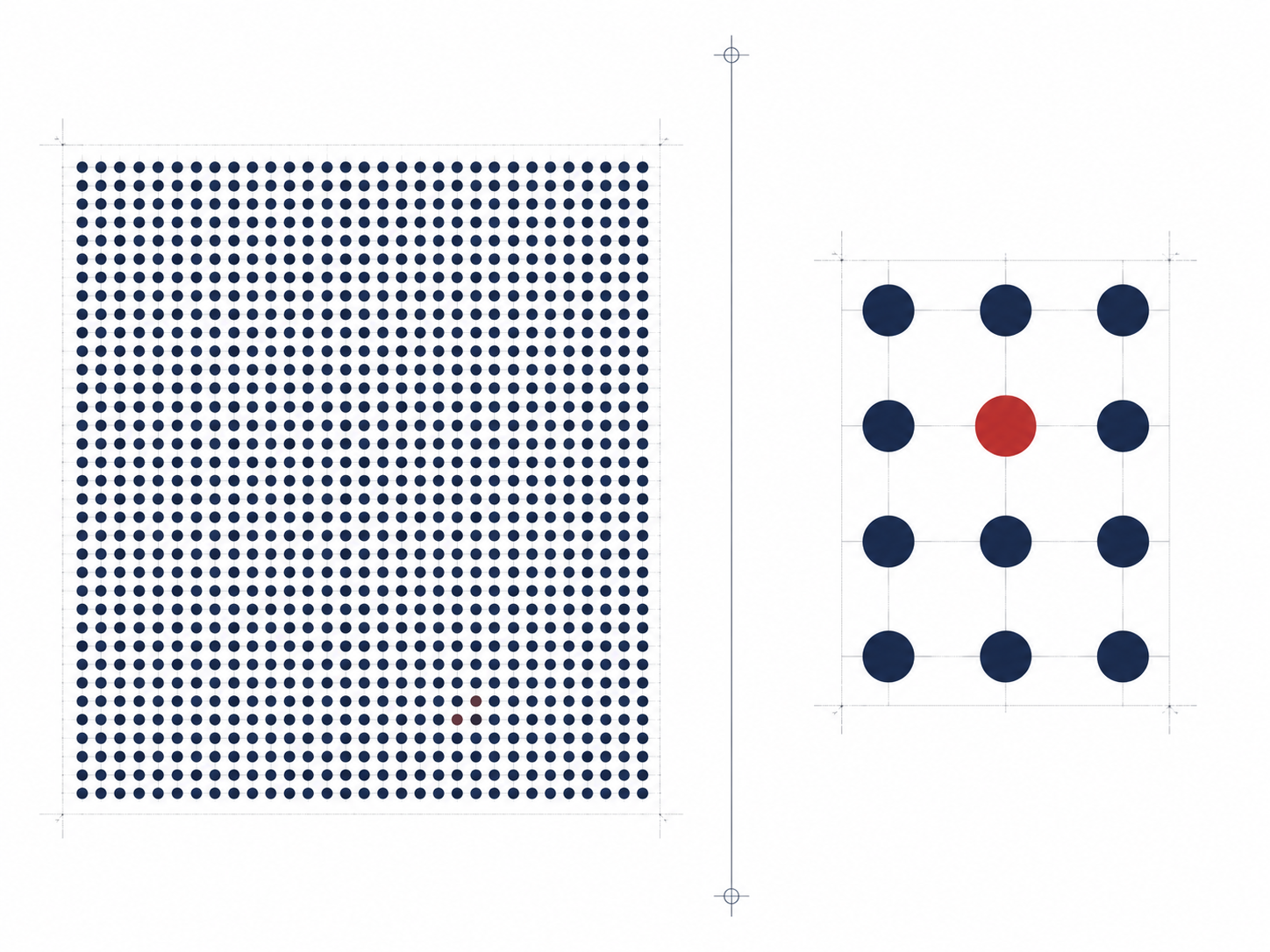
In a large dataset, one error disappears. In a small one, it becomes someone’s outcome.
There is no averaging effect. One bad join can become someone’s outcome.
Small-n reporting can identify individuals even when names are removed.
Data is used by institutions. Small systems amplify the impact on individuals.
Where this applies
- Workplace incentives, benefits eligibility, and compliance tracking
- Education and learning analytics
- Clinical programs, referrals, and small cohort interventions
- Community programs with eligibility, stipends, or resource distribution
This framework did not emerge in abstraction. It grew out of direct experience designing wellness and incentive systems, and from witnessing how technically sound programs can still cause confusion, disengagement, and harm. Small Data Ethics exists to make those moments visible — not as failures of people, but as signals from systems that need to be re-examined.