
By Laini Byfield
Theory
Foundations you can cite and teach — then operationalize through governance and practice.
Four ideas that do real work
Privacy is about appropriate information flows within a context — shaped by norms, not just rules. The same data can be harmful when it moves to the wrong place.
Contextual integrity
Privacy is about appropriate information flows within a context, shaped by norms: who shares what, with whom, and for what purpose. The same data can be harmful when moved to a new context — even if it was collected appropriately in the first one.
Suggested citation: Helen Nissenbaum, Privacy in Context (Stanford University Press, 2010).
Power and proximity
Small systems create relational exposure. The system operator often knows the data subject — a supervisor, a benefits administrator, a program coordinator. That proximity changes incentives and raises the accountability bar in ways that large-scale anonymous systems do not face.
Fairness under small-n
Small cohorts make subgroup analysis and reporting risky. Suppression, aggregation, and careful narrative framing are not optional politeness — they are ethical design choices with real stakes.
Contestability as a design requirement
Systems that produce consequential outcomes without an appeals path are not neutral — they are authoritative by default. The absence of a challenge mechanism is itself a design choice that concentrates power.
When data crosses a context boundary
The most common ethics failure in small data is not a breach — it is a context crossing. Data collected appropriately in one setting (employment, healthcare, benefits) becomes harmful the moment it flows into a setting with different norms, purposes, and power relationships.
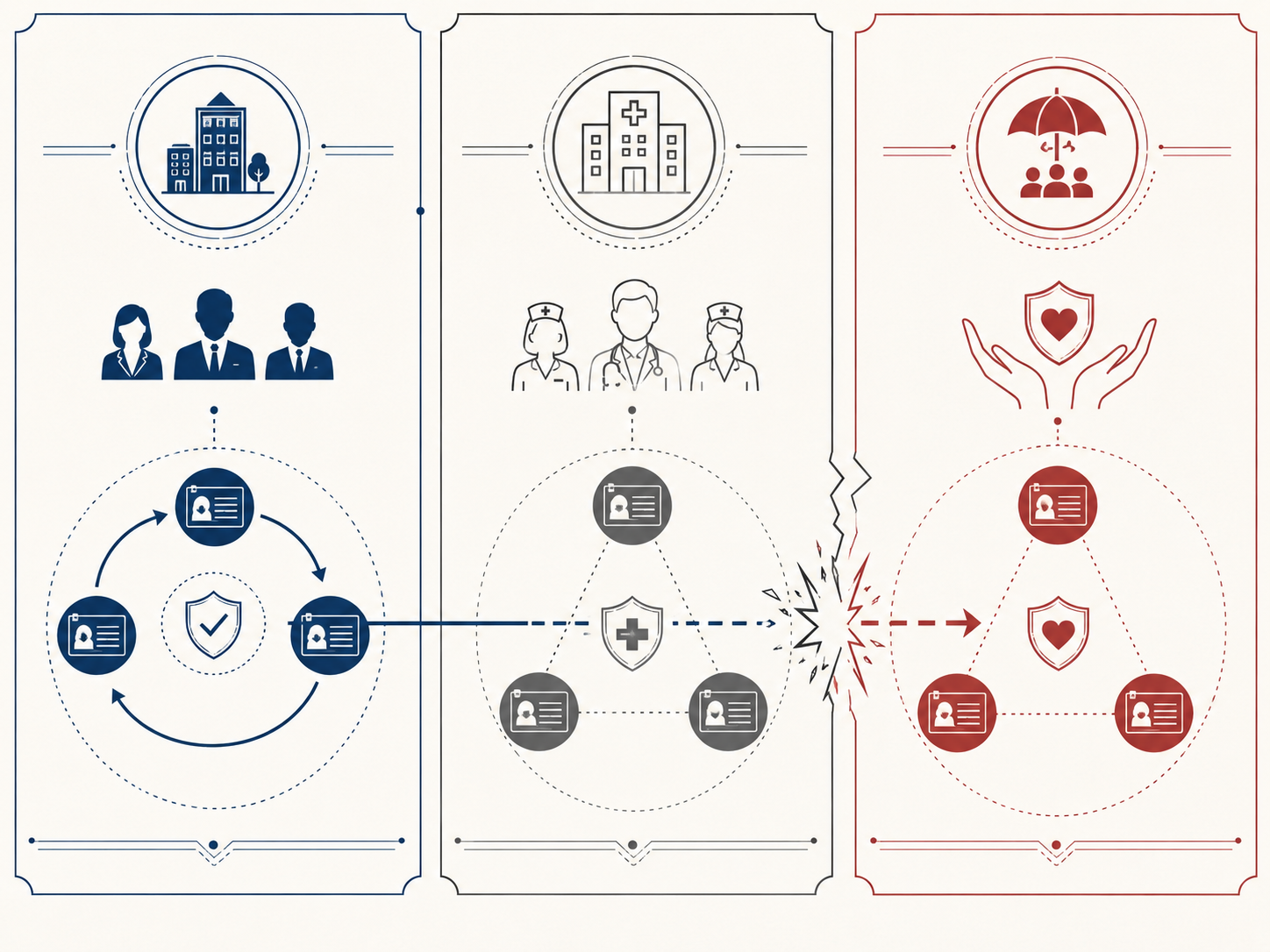
Data that flows appropriately within its originating context becomes harmful the moment it crosses into a context with different norms, purposes, and power relationships.
Theory matters only if it shapes system choices. A principle that does not reach the data pipeline, the contract clause, or the appeals process is decoration.
How these ideas become system choices
- Policy translates principles into rules and standards
- Governance assigns responsibility, review, and authority
- Practice embeds controls into day-to-day operations
- ETHICMAP makes the whole thing repeatable across cycles